Dejar un mensaje
Si está interesado en nuestros productos y desea conocer más detalles, deje un mensaje aquí, le responderemos lo antes posible.

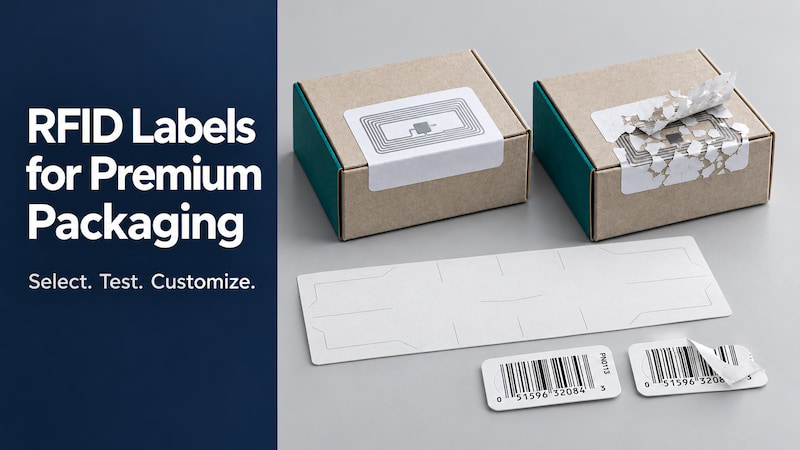
Tamper-evident RFID labels combine electronic product identification with physical evidence of label removal or package opening. For premium products, they can help discourage label reuse and support authentication and traceability processes. Brands can consider these labels for wine, cosmetics, luxury accessories, electronics, and collectibles. However, performance depends on the label construction, its position on the packaging, the chip's capabilities, and the connected system. Understanding these factors helps buyers select a label that meets their security requirements and fits their production process.
What Is the Difference Between Tamper-Evident and Destructible RFID Labels?
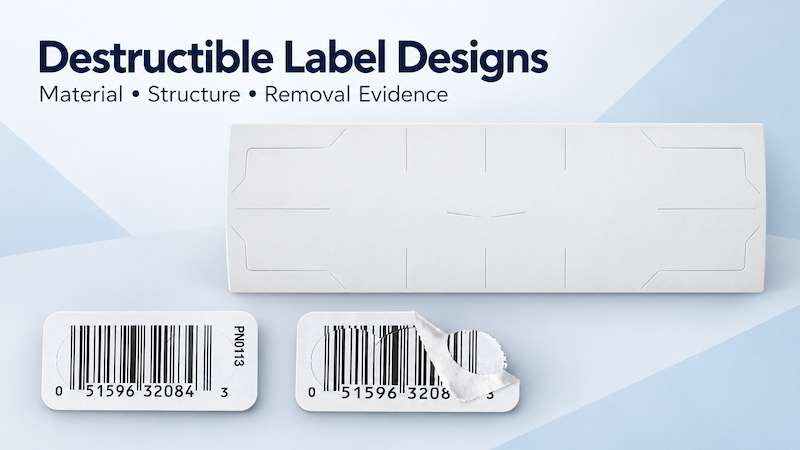
A destructible RFID label is designed to break during removal, while a tamper-evident RFID label provides evidence of interference. These categories can overlap, but they do not necessarily provide the same functions.
Destructible labels use materials, antenna structures, or layered constructions intended to make intact removal difficult. Peeling may tear the label, damage the antenna, or separate its layers. Tamper-evident labels may leave visible evidence, become unreadable, or incorporate an electronic detection circuit. The response depends on the specific design.
|
Label type |
Intended response to tampering |
Main purpose |
|
Destructible RFID label |
Material or antenna breaks during removal |
Make intact transfer and reuse more difficult |
|
Tamper-evident RFID label |
Removal or opening leaves visible or electronically detectable evidence |
Help identify interference |
|
RFID label with tamper detection |
A dedicated circuit changes state, which a compatible system can read |
Support electronic tamper checks |
A destructible label does not automatically report an “opened” status. If removal destroys the main antenna, the label may simply stop responding. Reporting tamper information while remaining readable requires an appropriate chip and circuit design, such as those supported by dedicated TagTamper solutions.
How Do Tamper-Evident RFID Labels Support Authentication and Traceability?
Tamper evidence, authentication, and traceability address different questions: has the packaging been disturbed, can the electronic identity be verified, and what recorded events are associated with the product?
Tamper evidence: A label placed across a package opening can be designed to break or change state when the package is opened. Destructible construction can also make it harder to transfer a genuine label to another product.
Authentication: An RFID identifier can link a product to a database record. For stronger electronic verification, projects may use chips supporting cryptographic authentication, together with secure key management and compatible verification software.
Traceability: Traceability comes from recording events at defined stages, such as packaging, dispatch, distributor receipt, and retail handling.
A typical workflow is:
Assign the label → Bind it to a product record → Scan at selected stages → Verify information and record events
Where Are Tamper-Evident RFID Labels Used in Premium Packaging?
Potential applications include premium products where packaging integrity, resistance to label transfer, and individual product identification are valuable.
|
Application |
Possible label position |
Intended function |
Main selection consideration |
|
Fine wines and spirits |
Across the closure and bottle |
Help indicate opening and discourage seal reuse |
Closure design, curved surfaces, and nearby liquid |
|
Cosmetics and fragrances |
Across the carton opening |
Reveal interference and connect to product information |
Limited space and coated packaging |
|
Luxury accessories |
Packaging seal or dedicated security attachment |
Support identification and make label transfer harder |
Reliable attachment without surface damage |
|
Premium electronics |
Across a box opening |
Associate packaging checks with a serial-number record |
Nearby metal and reader compatibility |
|
Limited-edition collectibles |
Protective enclosure or presentation-box opening |
Connect the package to registration records |
Long-term adhesion and association with the actual item |
A packaging seal primarily indicates the condition of the protected opening. It cannot independently prove that the contents are genuine or establish a complete ownership history. Those conclusions require additional verification and reliable records.
How Do You Choose the Right Tamper-Evident RFID Label?
Start with the required tamper response and operating process, then select the chip, materials, adhesive, and dimensions.
Should the label stop working or report a tamper state?
Choose a destructible construction when the objective is to make removal damage the label or antenna. If users must read an electronic tamper state after opening, specify that requirement separately and confirm the proposed design supports it.
Will users scan with smartphones or dedicated readers?
NFC is suitable for interaction with compatible smartphones, such as accessing a verification page. UHF may suit warehouse processes involving dedicated readers and multiple-item capture.
What surface will the label be applied to?
Identify the packaging material and finish, including varnish, lamination, texture, and curvature. Consider nearby metal or liquid, moisture, temperature, and storage conditions.
Will normal opening trigger the intended response?
The label should span the relevant moving or separating parts. Test the actual opening action to confirm that it breaks the intended structure or detection circuit.
What should be tested before bulk production?
Test adhesion after the specified application period, attempted peeling, normal opening, and readability before and after each action.
As an RFID label manufacturer, we can discuss suitable label constructions, chip options, printing, and agreed data-encoding requirements based on your application. Share your packaging details and intended use with us to discuss suitable options and samples.


 Red IPv6 compatible
Chatea ahora
Escanear a WeChat :
Escanear a WhatsApp :

 CATEGORÍAS DE PRODUCTOS